Case studies

Tested against the coating it replaces.

Three cases where TripleHard® was tested against Cr(VI) hard chrome, in the customer's own conditions or in a laboratory set up to match them. Each summary states what was compared, for how long, and what happened. The original document is attached where one exists.

Mining

Hydraulic cylinder rods: no rust after 34 months

≥17×service life: 34 months without rust, against 2 months on the same steel
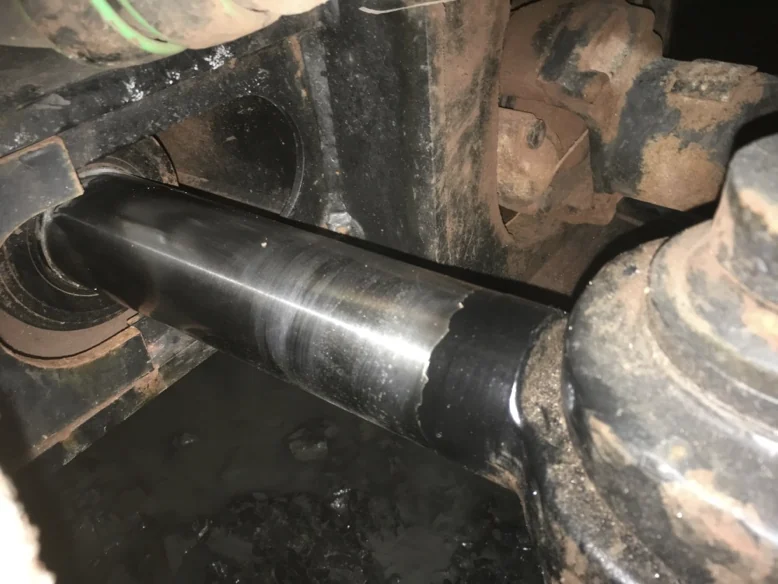
Two rods on the same ordinary steel went into the same Australian mine. The one with Cr(VI) hard chrome was back out at two months, rusted. The TripleHard® rod was still bright at 34 months.

Read the mining rod case study Mining case study (PDF)

TripleHard® coated cylinder rod on a mining machine after 34 months, bright and free of rust
TripleHard® on 20MnV6 steel, 34 months
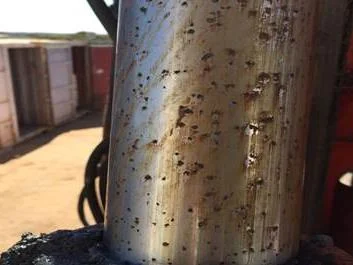
Hard chrome coated cylinder rod after 2 months, pitted with rust
Cr(VI) hard chrome on the same steel, 2 months
The full case study

Application

Hydraulic cylinder rods in an Australian mine, in a field case with a global mining equipment OEM. Salt, high temperature and continuous exposure to mine water. Corrosion is the failure mode.

What was compared

Rods of the same kind in the same service: two with conventional hexavalent chromium, Cr(VI), hard chrome, one on ordinary 20MnV6 steel and one on AISI 329 stainless steel, and one with TripleHard® on 20MnV6.

Green, corroded hard chrome rods next to bright TripleHard® rods after five days of mine water spraying
Comparison rods after 5 days of mine water spraying: commercial Cr(VI) coatings, TripleHard® rods bright
RodBase materialCoatingIn serviceCondition
120MnV6 (normal steel)Cr(VI) hard chrome2 monthsHeavy rust. Cylinder replacement necessary
2AISI 329 (stainless steel)Cr(VI) hard chrome4 monthsRust, even on the stainless base material
320MnV6 (normal steel)TripleHard®34 monthsNo rust

Result

On the same steel, the TripleHard® rod showed no rust after 34 months, where the hard-chrome rod had to be replaced at 2 months: at least 17 times the service life in this case. A separate spray test with 1 m, 60 mm rods in mine water showed the same difference in five days.

A rod that lasts seventeen times longer is also a rod that is made, coated, shipped and fitted seventeen times less often. Over a year of service the switch is estimated to cut CO₂ emissions by up to about 94 % per application.

Source for the CO₂ estimate: Metropolia University of Applied Sciences, thesis on the field case (Theseus)

Mining case study (PDF)

Valves

Ball valve in hot nitric acid: the coating that held

1.5+ yearsin strong nitric acid at 70–80 °C

Strong nitric acid at 70–80 °C and a ceramic seat: the Cr(VI) hard chrome ball wore through and leaked, the electroless nickel ball corroded. The TripleHard® ball was still in service a year and a half later. The customer calls it the best coating in that application.

Read the ball valve case study

A polished ball-valve ball with a blue bore, TripleHard® coated
TripleHard® coated ball for the field test
The full case study

Application

A ball valve from a valve manufacturer, in an electronics recycling plant in Belgium. The medium is strong nitric acid at 70–80 °C. The seat is hard ceramic.

What was compared

Three balls were coated by the same plating shop for a field test: one with hexavalent chromium hard chrome, one with electroless nickel and a dry-lubricant top coat, one with TripleHard®.

CoatingWhat happened
Cr(VI) hard chromeCrystallisation between ball and seat wore through the coating. The valve began to leak
Electroless nickel + dry lubricantNitric acid attacked the nickel under the top coat. Corrosion
TripleHard®More than 1.5 years in service with both corrosion and wear resistance intact

Result

According to the customer, TripleHard® is the best coating in that application. The valve had worked more than a year and a half in the real environment when the report was written.

Where hard chrome wears through and nickel corrodes, one coating covers both failure modes. That is what a valve in acid service needs.

Ball valve case study (PDF) — available on request

Shock absorbers

Shock absorber shafts: a quarter of the wear

4×less sliding wear than hard chrome at 15 µm

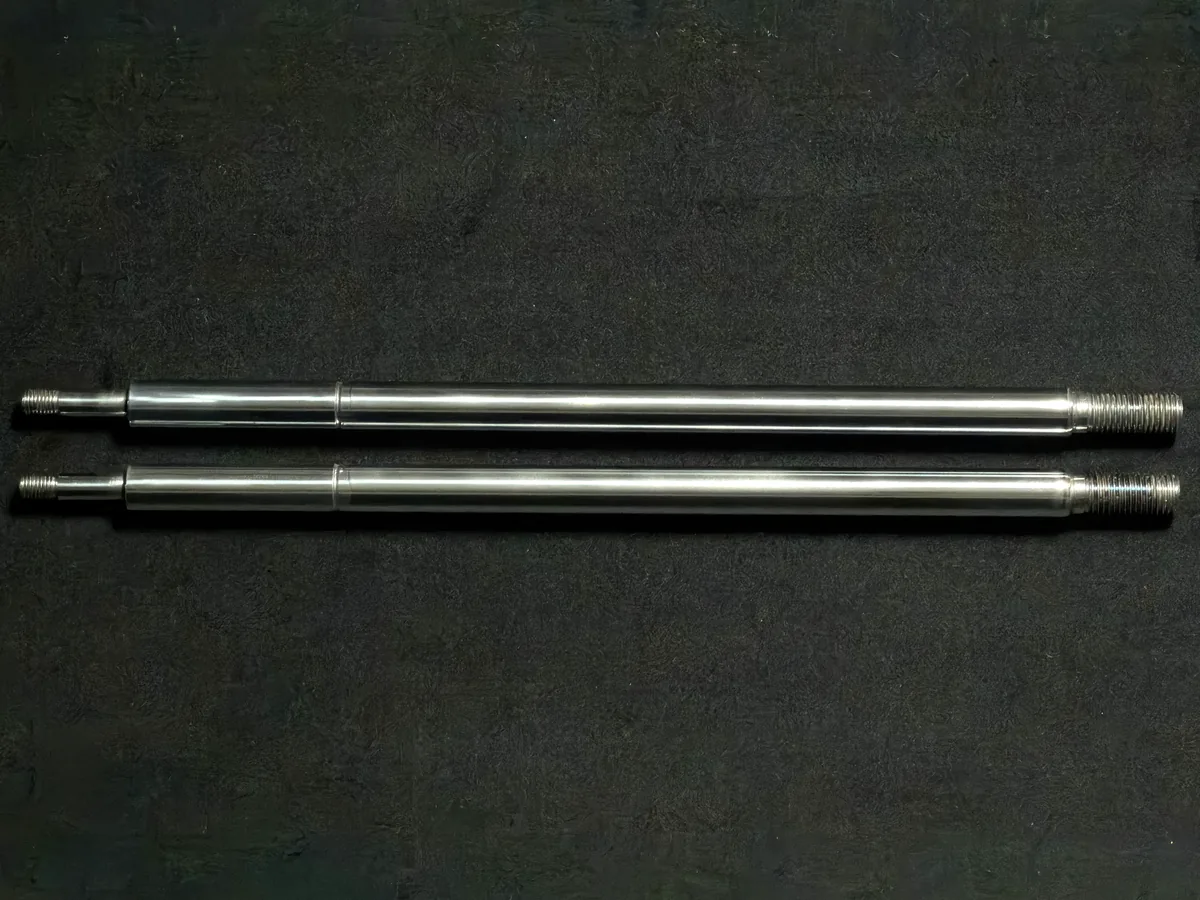
Two induction-hardened shafts, both coated at 15 µm, one with TripleHard® and one with Cr(VI) hard chrome. Same wear test. The TripleHard® shaft was harder and wore a quarter as much, which on a damper means the seal lasts.

Read the shock absorber case study

Two TripleHard® coated shock absorber rods lying side by side on a dark surface, threaded ends to the right
TripleHard® coated shock absorber rods, photographed in Kuopio
The full case study

Application

A customer looked for an alternative to hard chrome on a shock absorber plating line. Three properties decide the choice on this part: hardness, sliding wear and corrosion resistance.

What was compared

Two induction-hardened shock absorber shafts, one coated with TripleHard® and one with hard chrome, both at 15 µm coating thickness.

PropertyTestTripleHard® against hard chrome
HardnessHV0.01Higher than the hard chrome reference
Sliding wear6 mm Al₂O₃ ball, 500 g, 300 rpm, 20 minOne quarter of the wear depth of hard chrome

Result

At the same thickness TripleHard® was harder than hard chrome and wore a quarter as much in the sliding wear test. For the customer, that points to longer seal life on the same shaft; damping is verified in the customer's own damper.

Less wear on the shaft is less wear on the seal. On a shock absorber that is the whole service life.

Shock absorber case study (PDF) — available on request

Want the same comparison on your part?

Send us your drawings and the conditions your parts work in. We simulate the coating on your parts, design the line or the conversion with you and stay through commissioning in your plant.

Start your project with Savroc