

Engineering & simulation
We don't just develop the coating. We engineer the production process.
Savroc models every TripleHard® project on the customer's own parts before equipment is ordered, from a converted open-tank line to a new continuous line, designs it with the customer's engineers and commissions the process in the customer's plant.
How a project runs
We design it with you. Our partner builds it.
-
1
Targets and starting point
- Your parts and specifications
- Volumes and your current process
-
2
Simulation for your parts
- The coating modelled on your parts
- From your drawings
-
3
Design and targets
- Line concept or conversion plan
- Targets agreed in writing
-
4
Build or convert
- A new line from our partner
- Or your line, converted to our plan
-
5
Commissioning in your plant
- Process started up on site
- Operators trained
-
6
Production and support
- Chemistry and process support
- Optimisation, new applications
Simulation before deployment
Modelled for your parts before anything is built.
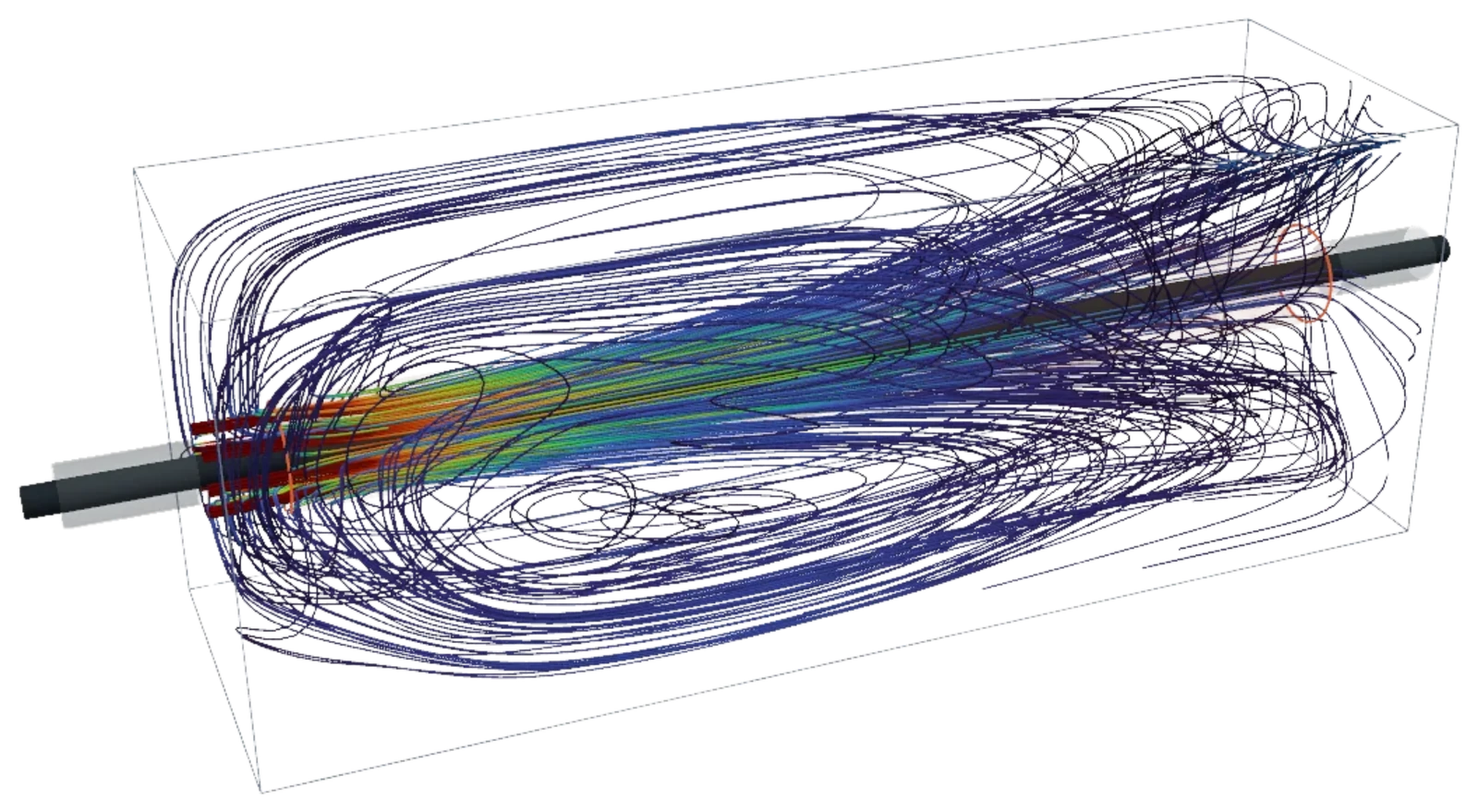
Every project is modelled on the customer's parts before equipment is ordered, whatever the coating work: an open-tank line being converted or a new continuous line. Electrolyte flow, gas and the current field in one model of the bath or the cell. A design change is a new run, not a new prototype, so variants are compared in hours.
-

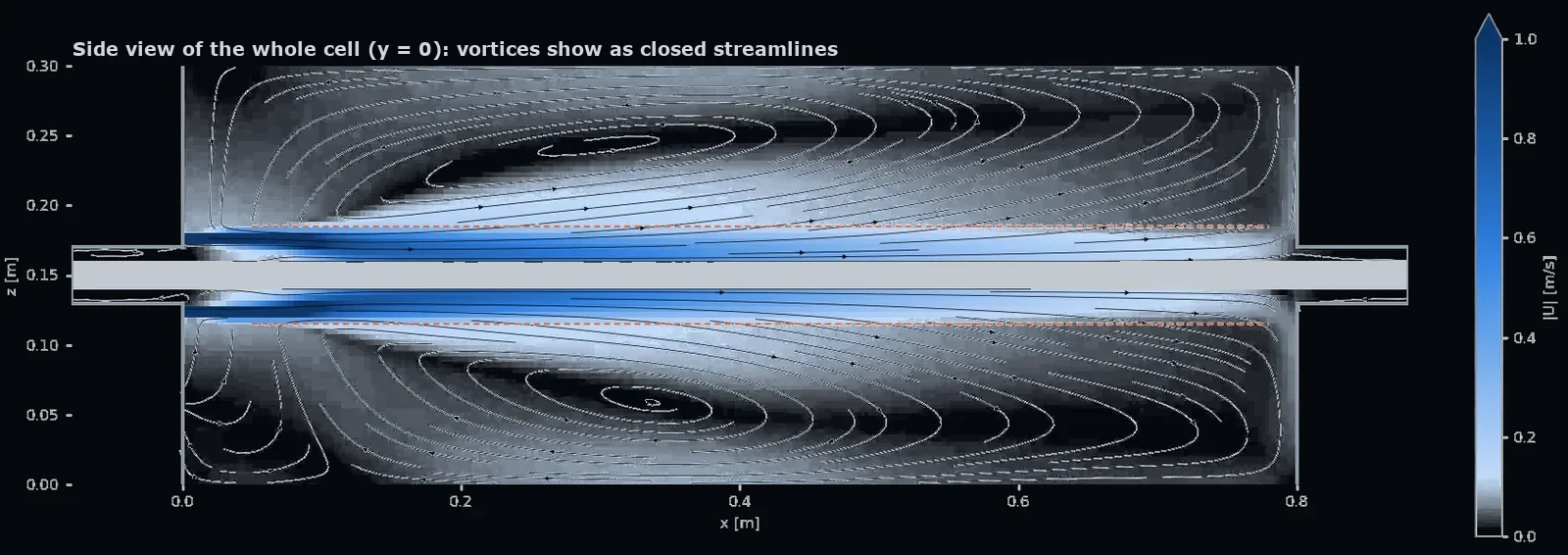
Where the electrolyte flows
Side section of the whole cell: the fast stream along the rod and the two large circulations above and below the anode that keep the tank floor moving.
-

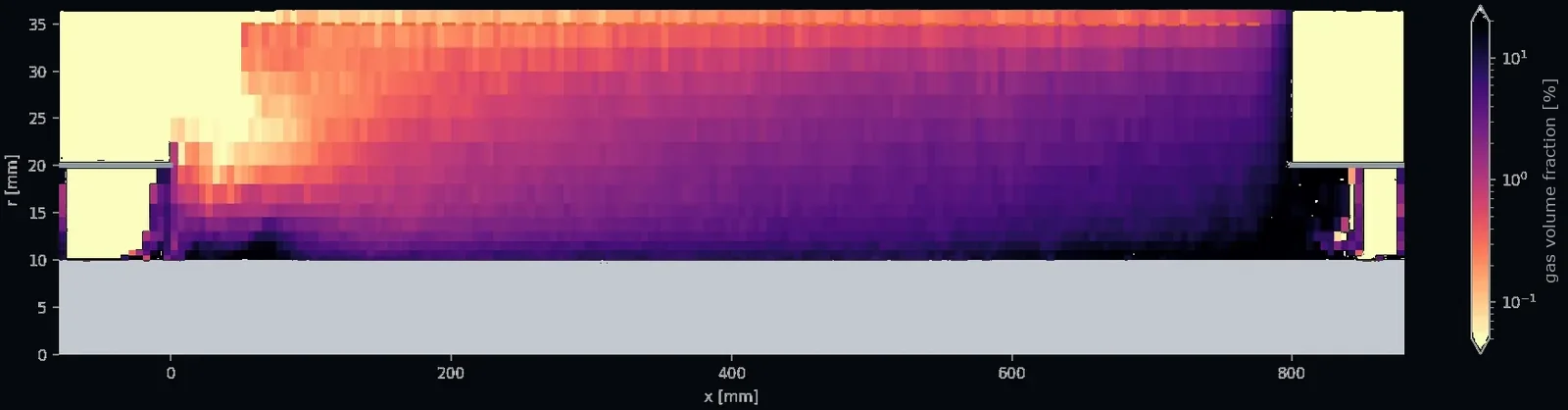
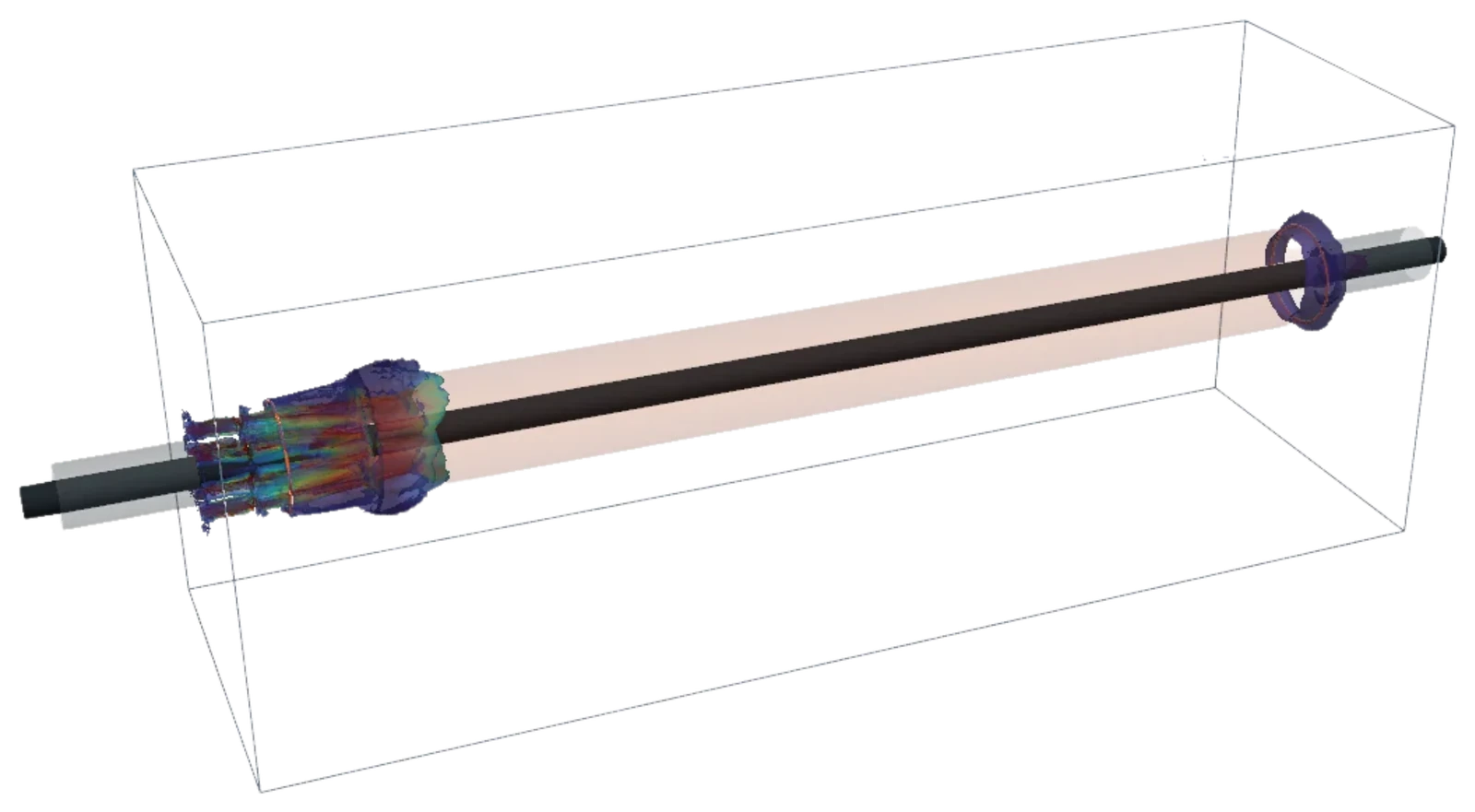
Where hydrogen collects
Gas fraction around the rod along the cell. Hydrogen gathers where the flow is weakest, so the flow is designed around it, not the other way round.
-

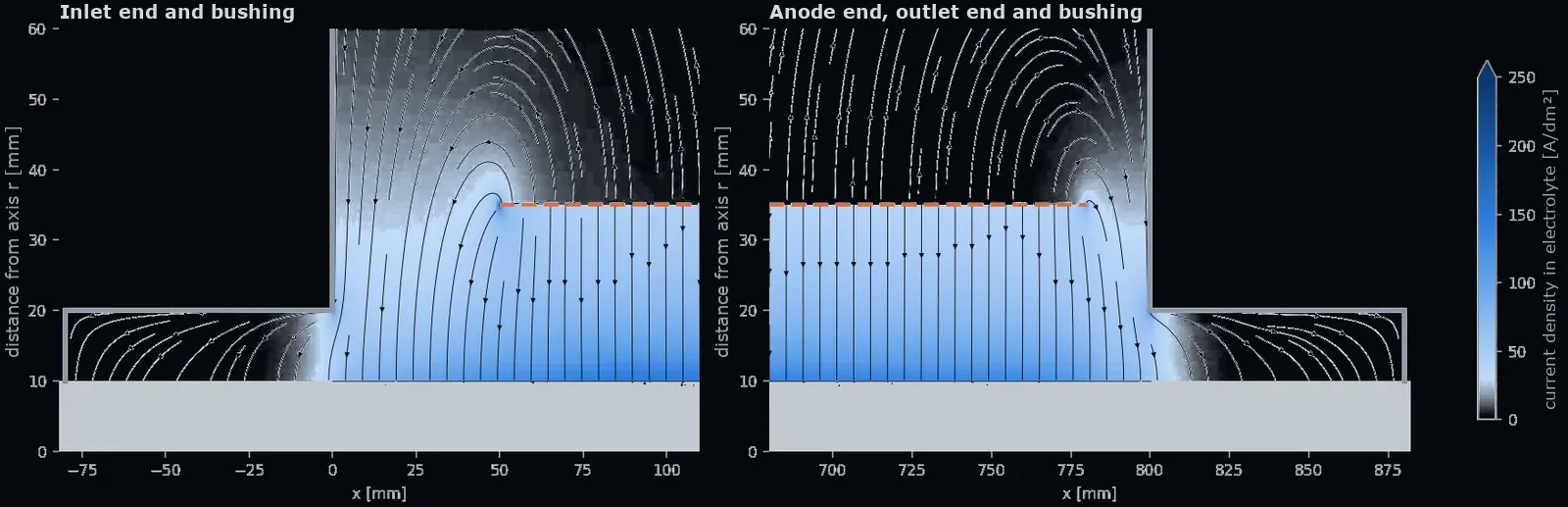
How current reaches the rod
Current field at the entry and exit ends, with the gas included. It shows where the layer builds evenly and where an end effect needs a design answer.
-

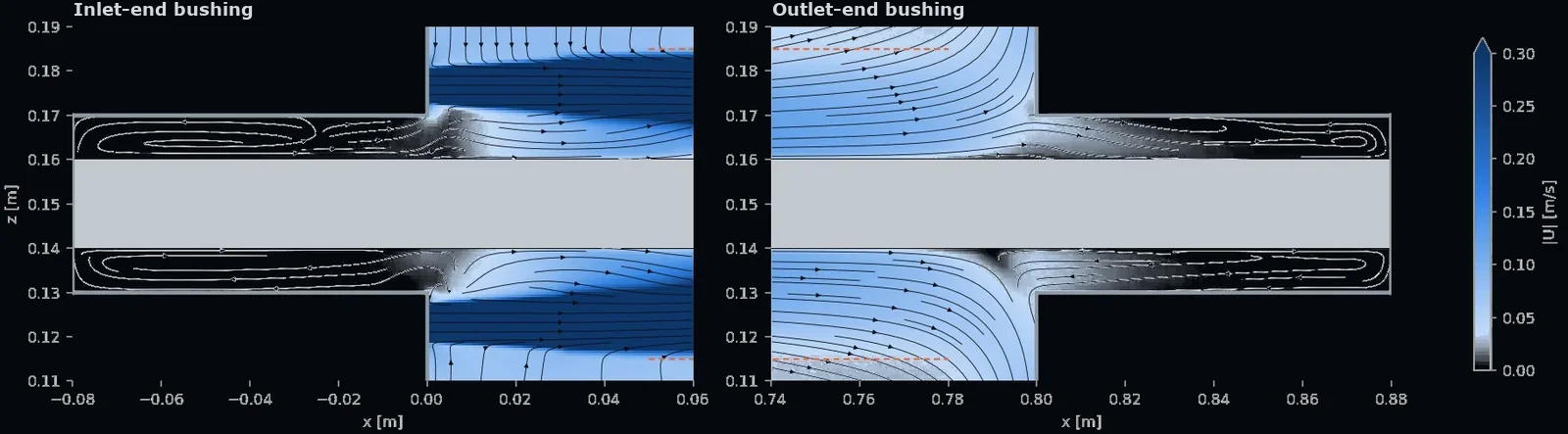
What the bushings do
The rod passes through a bushing at each end of the cell. The model shows the flow inside them, so nothing is left to guesswork where the rod enters and leaves.
Scenarios, one model
Change one thing and see what it does.
The same model with a different setting: more flow, a shorter anode, another part. Pick one and the flow paths change, and with them what the part gets along its whole surface. Each variant is an answer in hours, not a trial on the line.
- Reference
- the starting point every variant is compared with
- Whole length
- flow read along the full surface of the part
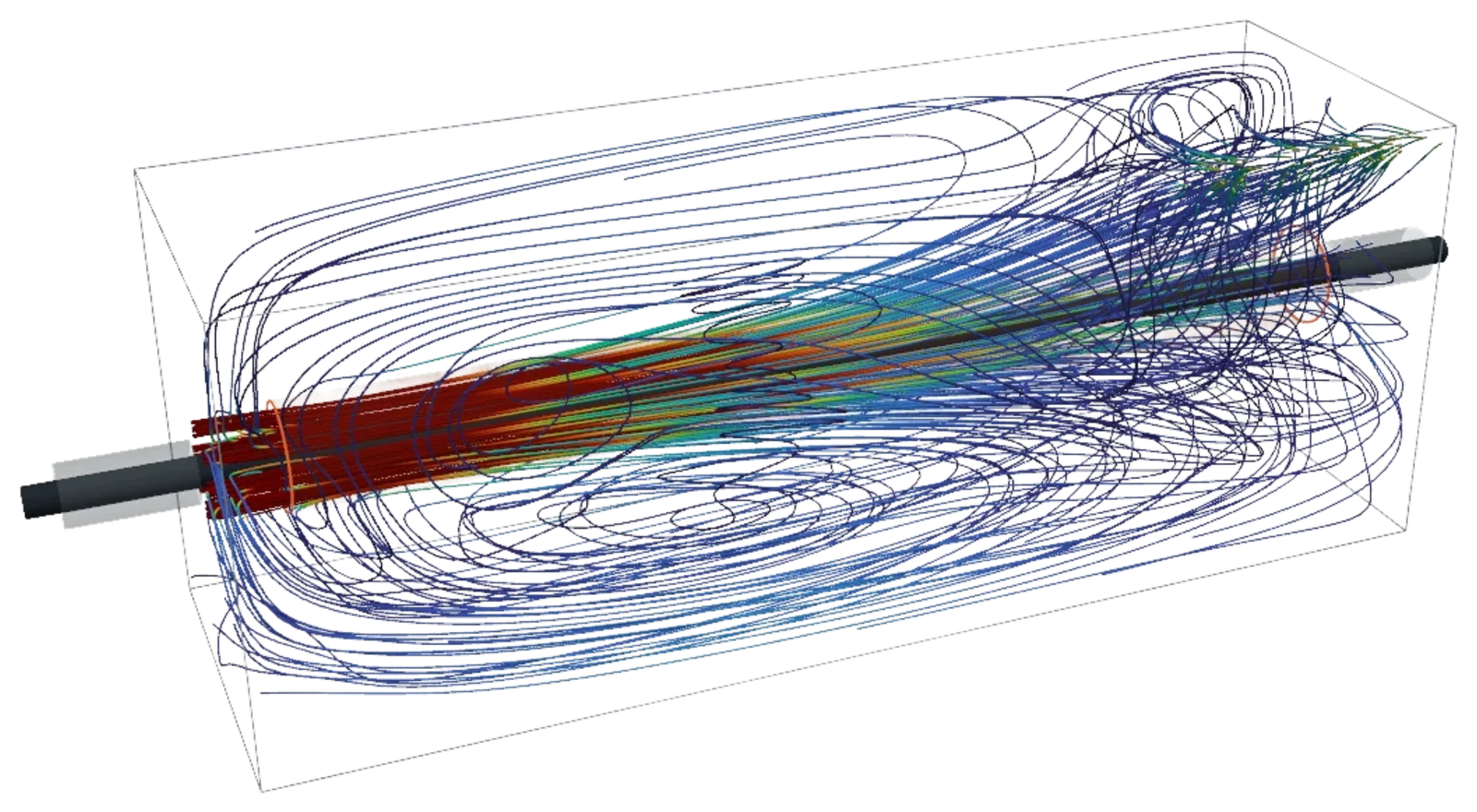
- Faster
- flow along the rod surface
- Less
- of the flow stays inside the anode to the far end
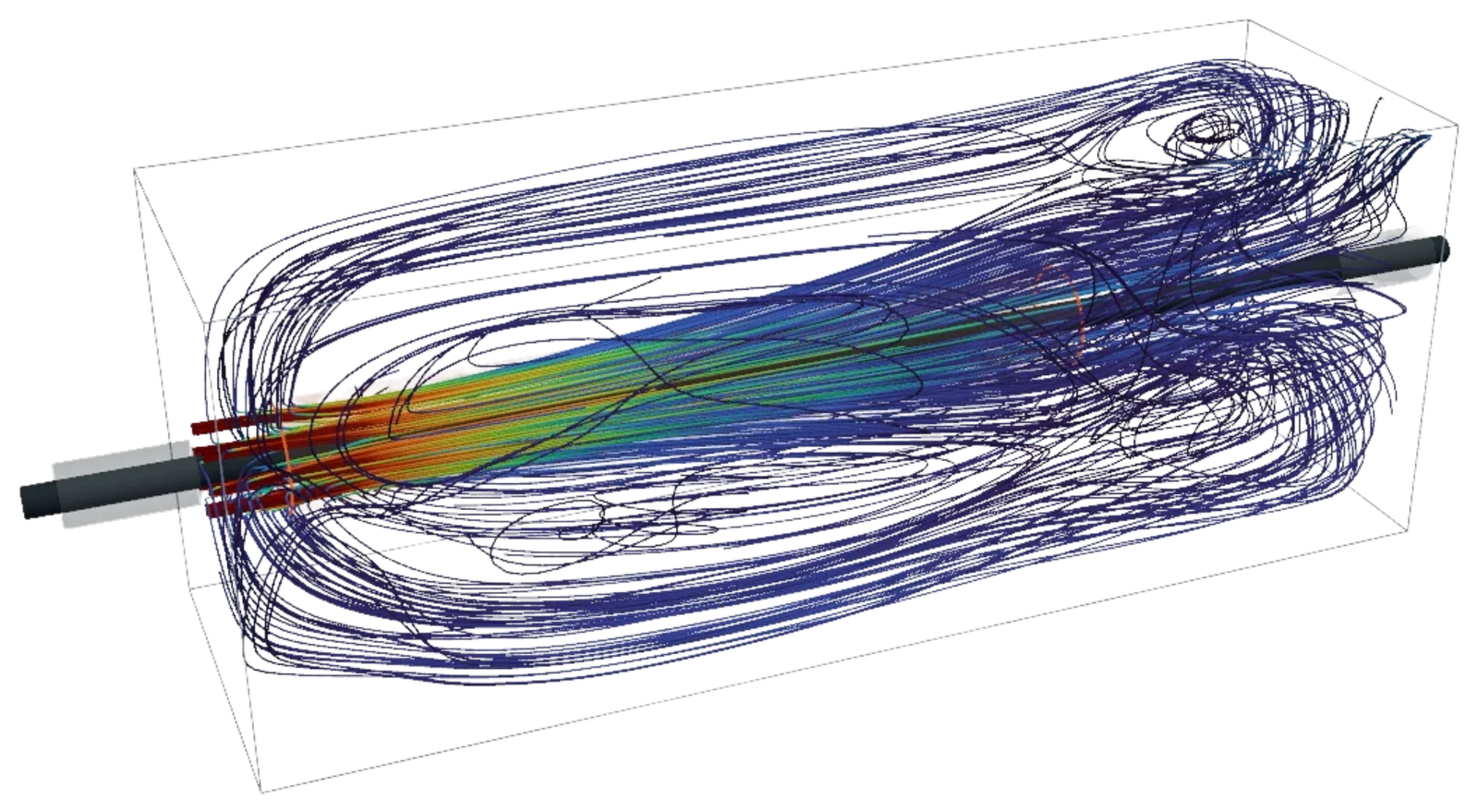
- Unchanged
- flow along the rod surface
- More
- of the flow stays inside the anode to the far end
From model to printed part
Five variants on screen. One ring on the printer.
Hydrogen gathered around the rod in the second half of a cell. Five inlet-ring designs were compared in the model, and the best one was 3D-printed and fitted.
- −56 %
- hydrogen at the rod surface
- 6×
- flow along the rod
- 2.4×
- faster floor renewal
Sized for your volumes. Configuration, size and line speed come from simulating your diameters, coating thickness and volumes, not from a catalogue.
Deliverables
What a project produces, and who produces it.
| Deliverable | Content | Provided by |
|---|---|---|
| Simulation report | Flow, current distribution and coating build-up for the customer's parts | Savroc |
| Line concept or conversion plan | Process steps, configuration, layout principles; for a conversion, what changes in the existing line | Savroc |
| Capacity model | Line speed and configuration for the diameter range, coating thickness and annual volume | Savroc |
| Acceptance criteria | The targets the customer's parts must meet, agreed in writing before the build | Savroc with you |
| Line equipment | Mechanical design, fabrication, installation of a new continuous line | Line builder |
| Commissioning | Start-up on site, operator training, an accepted trial run and qualification documentation | Savroc |
Savroc does not offer contract coating. TripleHard® is already tested and in industrial use, so a project starts from the simulation of your parts; samples are coated only on special request.
Engineering questions
What does Savroc need to start a simulation?
Part drawings or a diameter and length range, the specifications the parts must meet, the target annual volume and coating thickness, and for a new line the plant: the floor area and height available, power and water supply, and ventilation.
Can simulation images be shared?
Simulation results are customer-specific and shared only with that customer. Published examples are approved, non-customer-specific images.
Does Savroc build the line?
No. Savroc designs the process and the line concept with the customer and commissions the process in the customer's plant. A new continuous line is built and delivered by our industrial equipment partner, and the customer orders the line from them.
See it for yourself
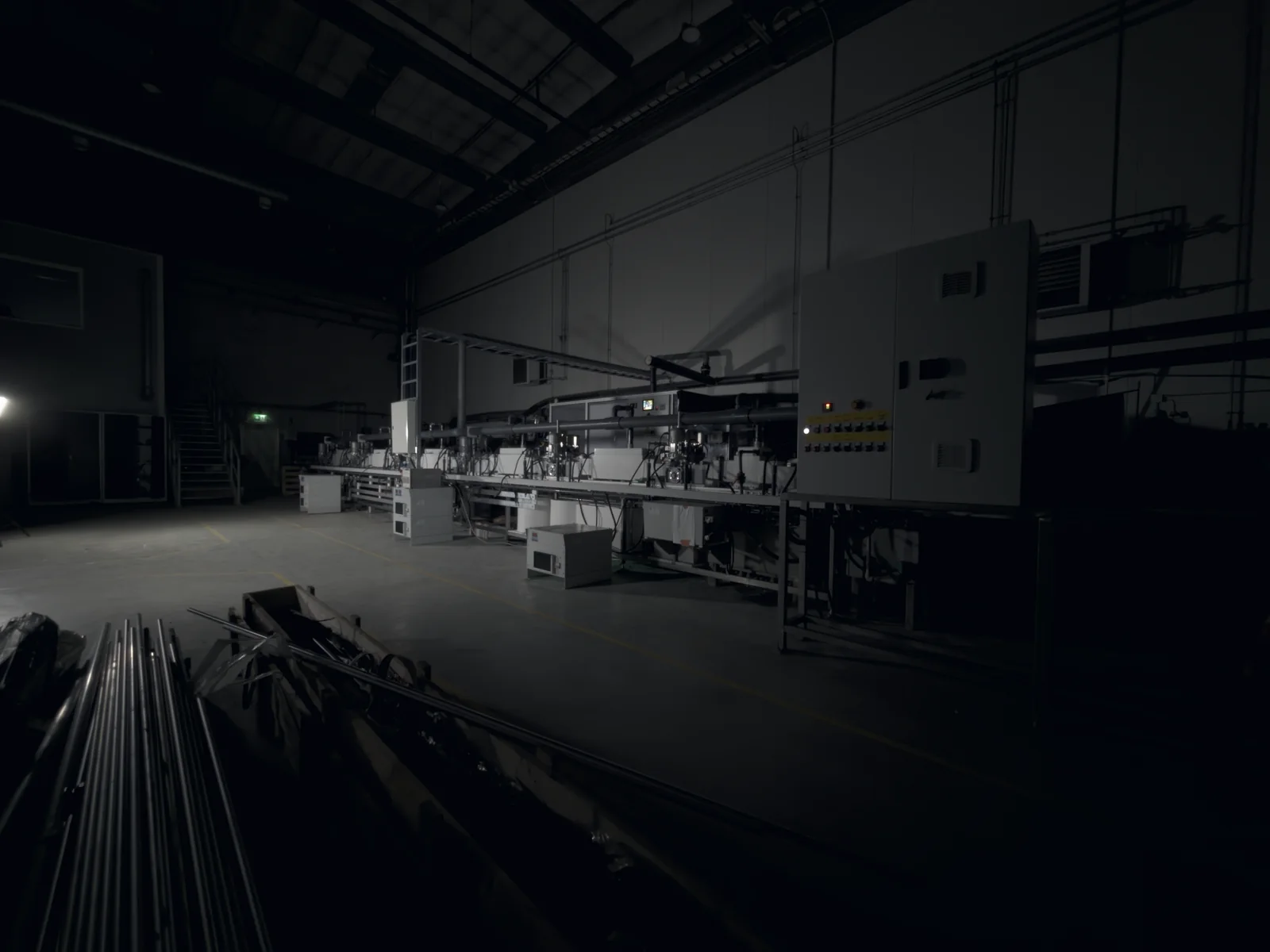
The line runs in Kuopio. Come and watch it coat a rod.
Bring your drawings or your parts. Jussi Räisä shows you the line, the test data and what a project in your plant would look like. No sales deck, no commitment.
Jussi Räisä, CEO jussi.raisa@savroc.com +358 44 307 1409